Laura Moore - Artist
Selected statement pieces. Explore more in the portfolio and in progress sections.
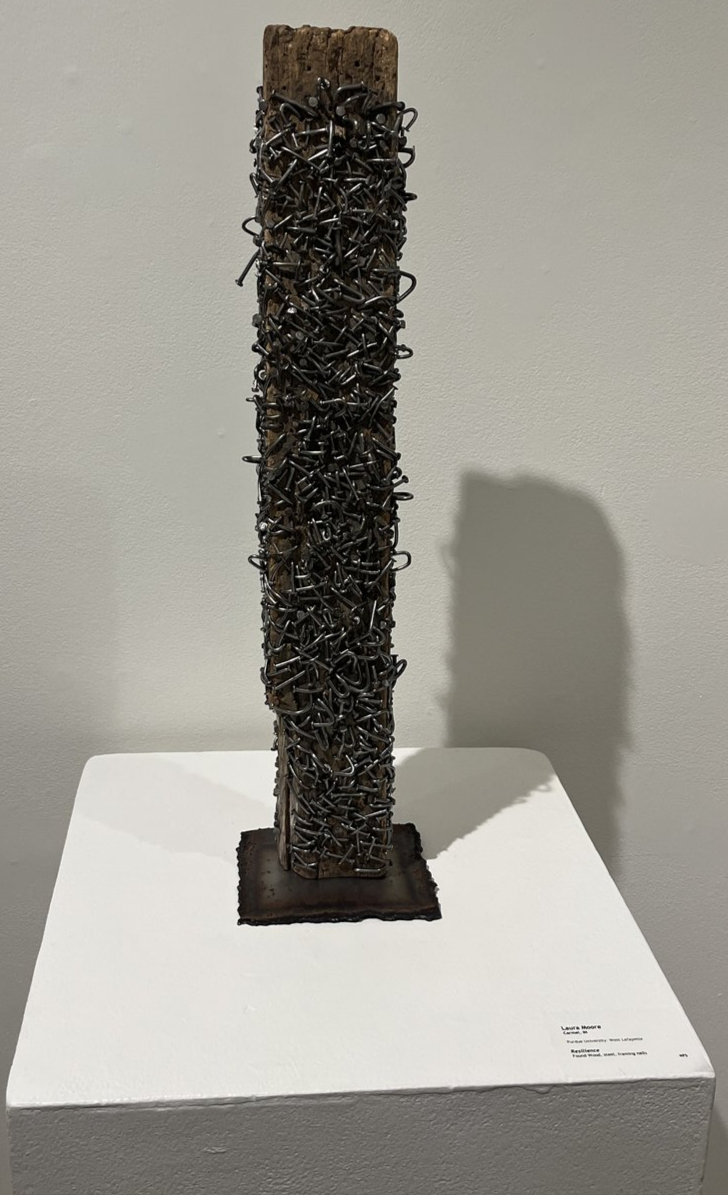
Resilience
Native wood, framing nails, steel
The labor materials utilized address an individual’s willingness to work despite the attempts, failures, and successes embedded in a task. The sculpture’s defined task produces no usable product, but instead focuses on an individual’s sheer willingness to engage in a laborious process. The repetitive micro moments within the structure invite the viewer to consider defined success and failure points on an equal plane. Additionally, the material contrast between the found wood — nearly 150 years old — and the modern steel framing nails offer a past and present endurance contrast. Note specifically how the found material withstands endless impacts from the modern material without collapsing. A specific fracture point is highlighted, where the modern material nearly engulfs the found material, but the material’s core is impenetrable. The sculpture’s cornerstone statement rests in the resilience duality between the force applied and the force endured.


Residue
Black and White Prints
Darkness, details, and rough intricacies paint a work of repetition and stability in the abstract representation of a mechanic’s oil drain pan. The harsh shadows and complex pattern reference the continuous hours of labor invested in the material development. The approach to the imagery offers an alternate insight and vast environment that encompasses the finite atmosphere of a habitual action within the automotive maintenance facility. Individuals outside this raveled ambience rarely find opportunity to enter its detailed interior. The images provide both a definitive and reflective circumstance that transports viewers to an alternate location. The simplicity of the material photographed contrasts the elaborate minutia of the image. The piece addresses the complexity within material progression as it sustains preferential weathering due to its predictability and reliability. These attributes can be indisputably transcended to the workers who utilize these materials on a daily basis.
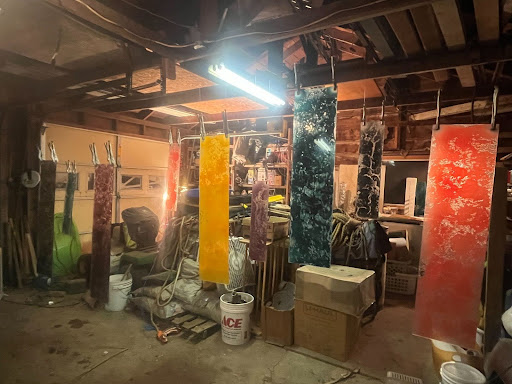
Greaseograph
Automotive Lubricants, Plexiglass, Vice Grips
The isolated relationship exposed between the lubricant and the movement of material addresses the intricacies of the working process. The concentration, channels, and voids indicate the fluid transition from one event to another as labor is applied to a working environment. Aspects of totality are addressed as coverage encompasses each component of the sculpture. The material utilized within labor industries provides barriers and opportunities that would otherwise be impossible. The vibrant color variation suggests a spectrum of assets and knowledge utilization. Application of each lubricant demands specific conditions and applications. The window panels create portraits of individual movements: unpredictable and organic. External forces control the relationship between the material and its containers and the forces leave lasting imprints for interpretation. The piece addresses not only the simultaneous visual and physical interactions of the material, but also the complexity within a worker’s movement and process. As tasks and time advance, the worker must apply insight and effort in an ever changing and adaptable approach to complete the required task.
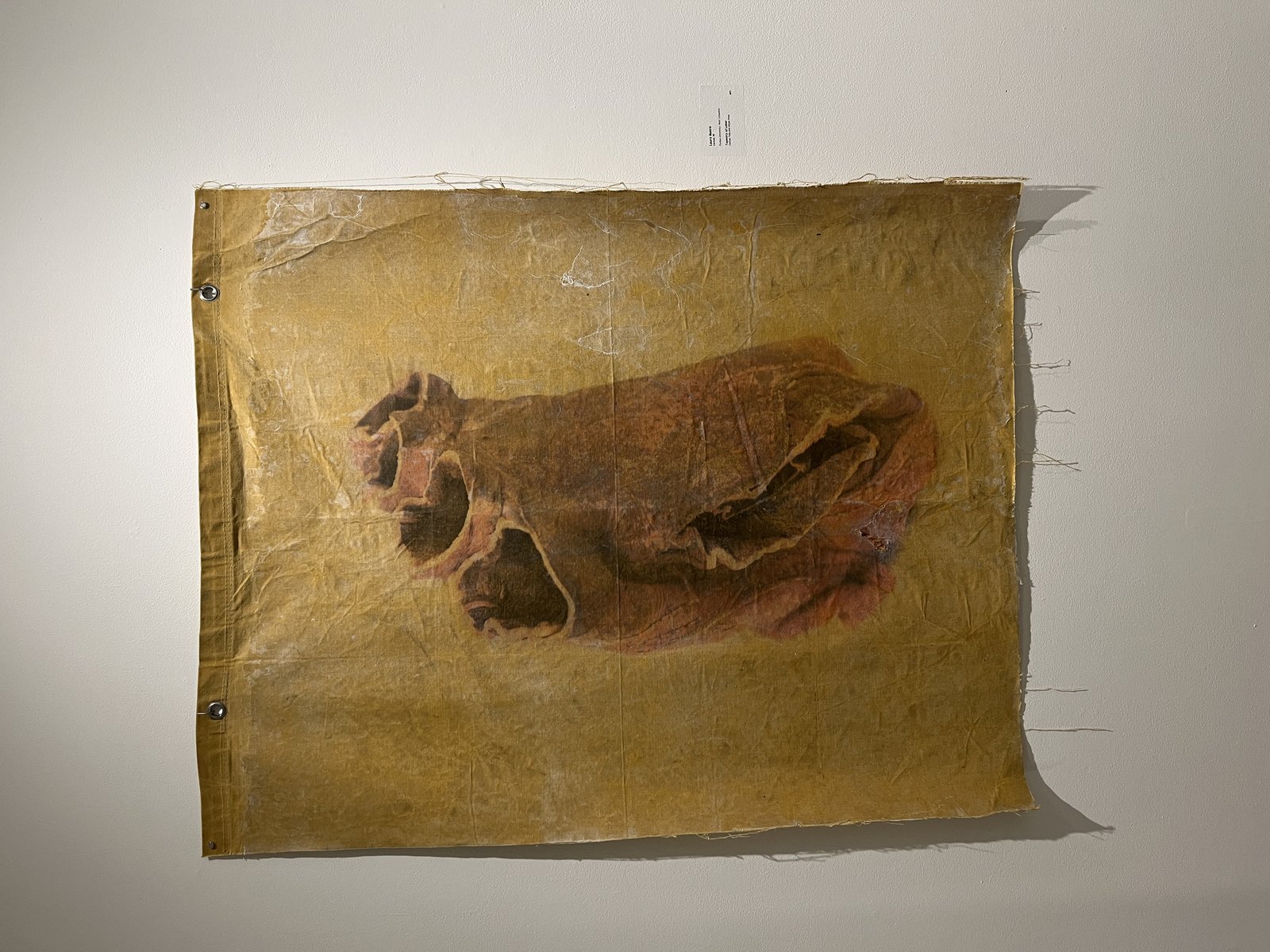
Tapestry of Labor
Canvas tarp and found material dot print image transfer
Preferential weathering permeates labor industry materials. Items that are relied upon show their useful hours in every detailed crease and collected residue. The labor moments in both the canvas tarp and the leather glove image transfer provide a meeting point for these reliable protectorate items. The image’s integration into the canvas fibers signifies value, worth, and reliance. The chosen materials are worn threadbare in both physical appearance and image representation. The sizeable perspective at 42 inches by 54 inches highlights the intricate labor nuances in each leather crease line that would not be noticeable on a smaller scale. The piece elevates the labor process’ value to that of classic high art grand tapestries. The piece harkens back to the ancient Wabi Sabi principle that insists imperfect items gain irreplaceable value as they are worn down over time because they archive the hours invested in an impermanent process that contributed to the development of the individual’s character.